Workplace Trends 2026
Explore the Top Trends Shaping the Workplace of the Future
The Strategic Reset – Balancing Cost, Compliance, and Culture
The Southeast Asian (SEA) commercial real estate market is undergoing a structural reset.
Demand for secondary assets is softening, while appetite for Premium Grade A space is accelerating. In Singapore, Central Business District (CBD) vacancy is forecast to fall below 4%, with limited new completions intensifying competition for prime floors. Across other SEA capitals, supply may be ample, but leading firms are executing a clear flight to quality, upgrading from ageing stock into high-performance, ESG-compliant towers.
The pattern is consistent across markets: companies are not simply renewing leases — they are upgrading their operating platforms.
In 2026, the boardroom question is no longer “what does space cost?” but: “does our real estate actively advance our business strategy?”
1. The ‘Clubhouse’ Model: Brand Embodiment Over Desk Density
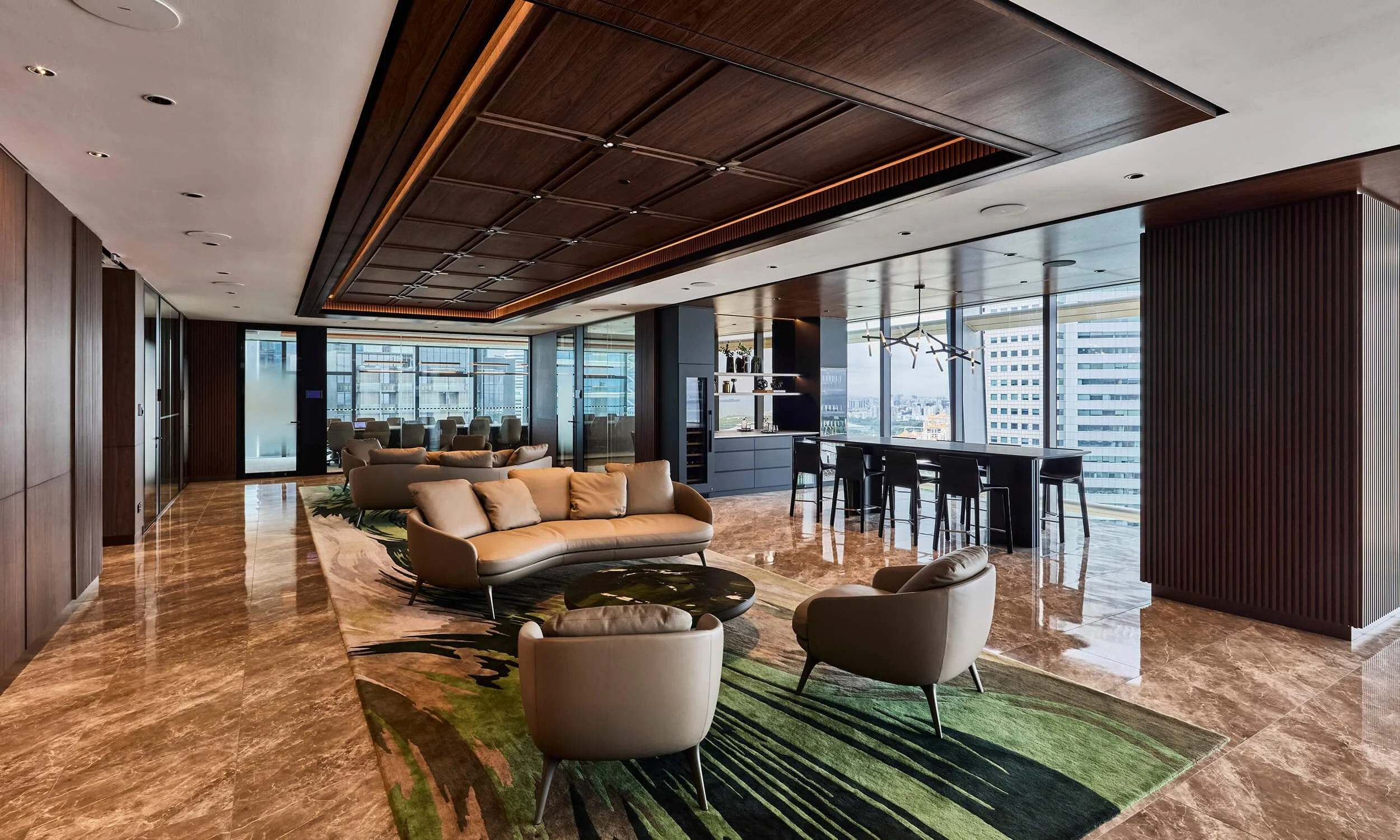
Baker McKenzie. Wong & Leow's new office features shared hubs that replace silos and give equal access to light and views.
Leading organisations are reducing total footprint while increasing investment per square metre.
At Conexus Studio, we are observing a shift in how global corporations approach their real estate: savings from consolidation are being redirected into higher-spec finishes, advanced workplace technology, and ESG-aligned materials. The shift, corroborated by CBRE’s Asia Pacific Fit-Out Cost Guide, reflects a strategic pivot: the office is no longer a container for desks, but a platform for culture.
As regional hubs replace satellite offices, space must justify the commute. The dominant model resembles a members’ clubhouse — socially vibrant, hospitality-driven, and brand expressive.
Democratising the Floorplate
Physical hierarchy is dissolving. Even within traditionally conservative sectors such as law and finance, enclosed partner offices are giving way to shared light, open hubs, and collaborative zones.
Conexus Studio’s Creative Director, Siva Ganesan, notes that this is a pragmatic move to attract younger talent who reject traditional rigidity: “In the past, hierarchy dictated the layout — every partner had to have an office. Now, we're knocking those walls down. Companies realise that to get the best talent, they need engaging social spaces, even in corporate setups. It’s the new price of entry.”
The Concierge Experience
First impressions now function as brand theatre. In premium buildings, arrival is no longer administrative — it is experiential.
Reception areas are evolving into concierge-style hospitality zones, replacing transactional desks with lounge environments, barista bars, and flexible town hall spaces. Residential-inspired (“resimercial”) design continues to mature, softening corporate edges while maintaining commercial performance.
By reclaiming square footage from private suites, companies are investing in amenities like barista bars and town hall arenas. This aligns with JLL’s research into the hospitality-infused office, which identifies concierge-style services as a primary driver for future workplace engagement.
2. Environmental Performance: Compliance Meets Cognition
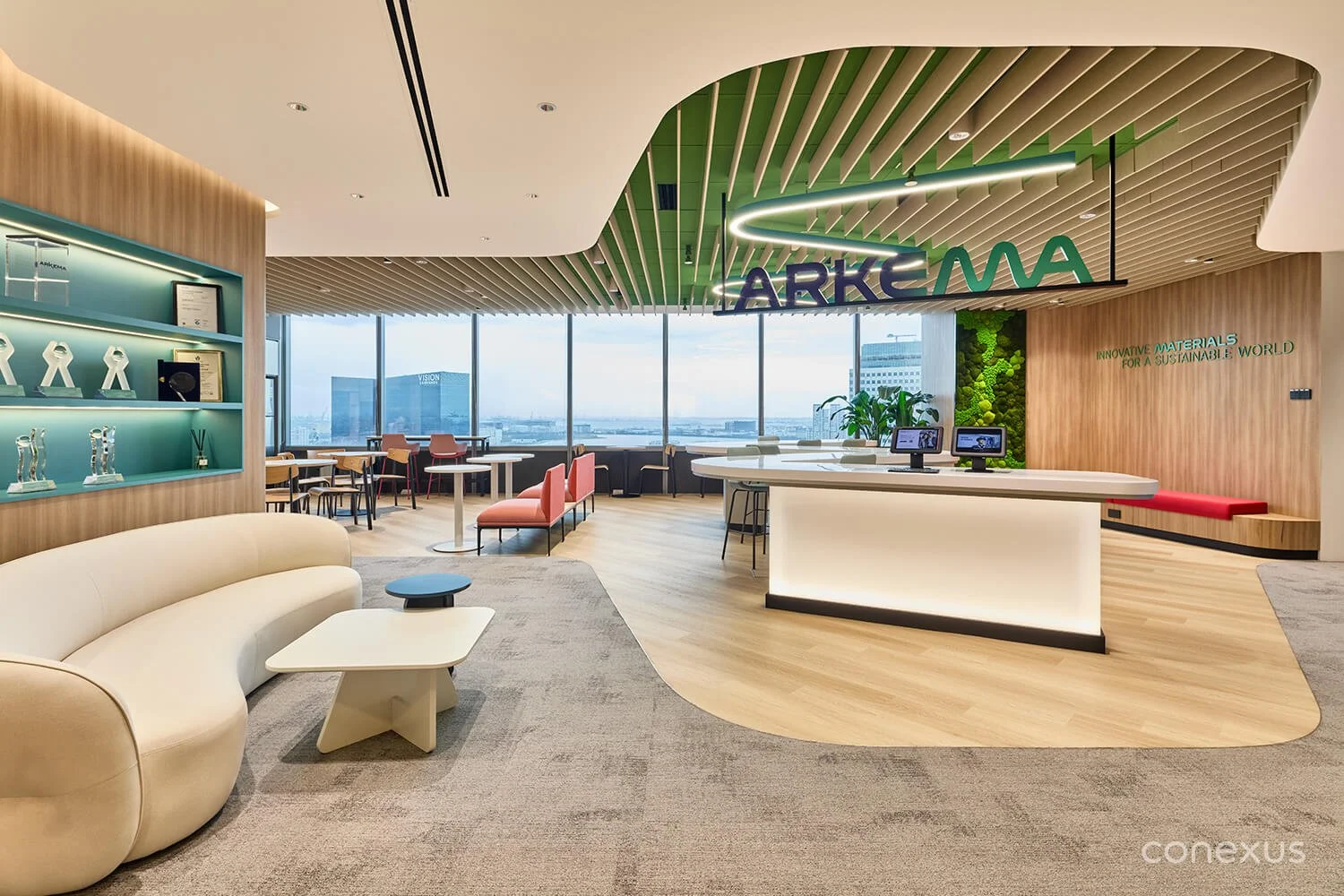
Arkema’s reception showcases biophilic design with lush indoor plants and natural wood ceiling baffles, creating a warm and welcoming environment.
Sustainability has shifted from marketing narrative to operational requirement.
Across Southeast Asia, sustainability is no longer a marketing label but a mandatory baseline, driven by both local regulations and corporate ESG commitments.
Low-Embodied Carbon Materials
Beyond going paperless, reducing associated storage, and complying with sustainability regulations, 2026 design is defined by Circular Economy principles, prioritising modular systems and materials that can be easily repurposed or recycled at the end of a lease, rather than demolished and sent to landfill. This is driving a shift towards low-embodied carbon finishes like mycelium, cork, and FSC-certified bamboo, alongside zero-waste pantries and reconfigurable furniture that minimise environmental impact.
Cognitive ROI
Indoor Air Quality (IAQ) is no longer just a measure of comfort; it has become a vital component of creating adaptive, healthy, and high-performing workplaces. The focus has shifted towards optimising air quality to directly enhancing employee health and productivity. Research, such as the Harvard Healthy Buildings Program’s COGfx studies, indicates that maintaining CO2 levels below 600ppm can help prevent cognitive decline during complex tasks. As a result, workplace investments in automated monitoring dashboards are becoming the standard to prove that the office is engineered for performance.
3. Designing for the Senses: Intelligent Acoustics and Lighting
The hybrid debate has matured. The 2026 frontier is sensory optimisation.
In metropolises like Singapore, Kuala Lumpur, and Bangkok, where external urban density often mirrors internal office density, the primary friction point is now acoustic and visual overstimulation. We are seeing a critical need to decouple buzz from distraction, ensuring that the push for vibrant collaboration does not inadvertently sabotage deep work.
Soundscapes and Adaptive Audio
Organisations are moving beyond passive soundproofing toward engineered acoustic ecosystems. This includes the integration of biophilic soundscapes—scientifically engineered background audio (like running water or forest sounds) that masks distracting speech while promoting restoration. These systems allow for a holistic workplace experience, balancing the buzz of the clubhouse with the need for concentration.
Intelligent Circadian Lighting
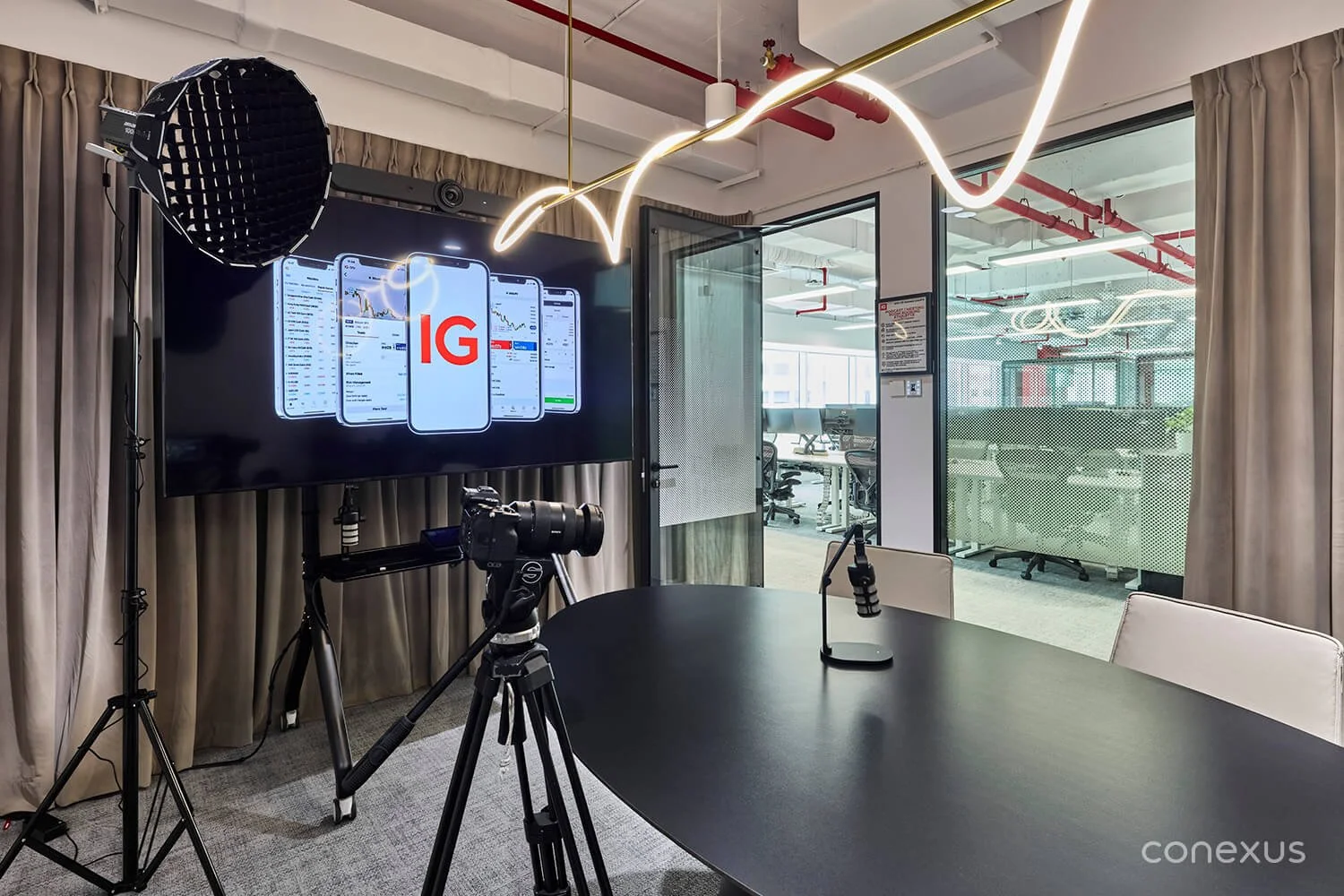
Static overhead panels are being replaced with tuneable LED arrays that synchronise with circadian rhythms. This technology supports wellbeing, neuro-inclusivity, and sensory design by automatically adjusting colour temperature and intensity to reduce eye strain. Operationally, it drives efficiency by reducing energy usage, lowering maintenance costs, and increasing fixture longevity. Meeting rooms now frequently come with a presentation, discussion, and hybrid presentation mode.
4. Neuro-Inclusivity: From Wellness Initiative to Workforce Strategy
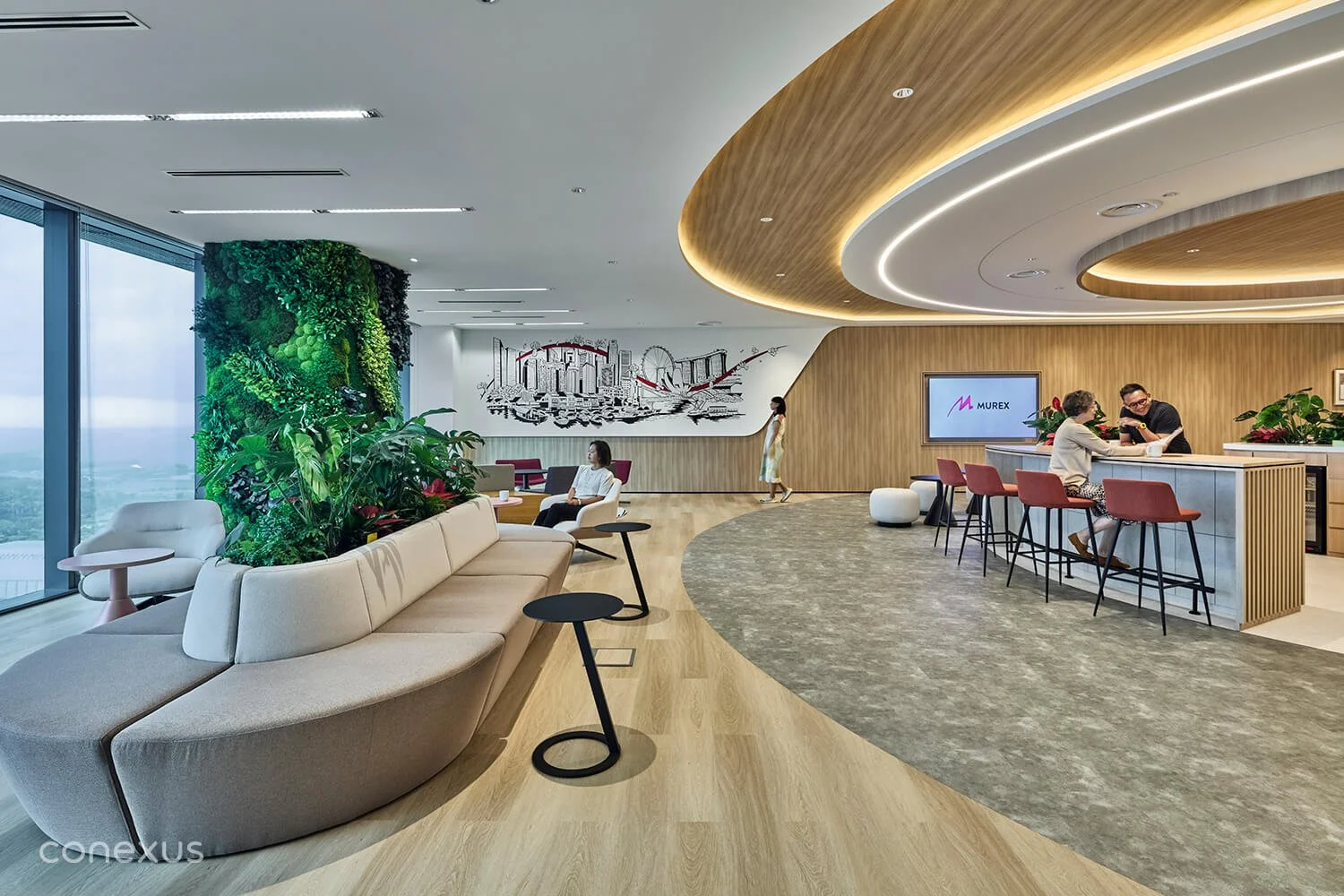
Murex’s social hub embraces a serene café vibe, featuring relaxed seating, inviting views, and vibrant greenery.
Quiet rooms are not new. What has changed is the commercial imperative.
Research from Motionspot indicates that 22% of neurodivergent talent decline job offers due to office design. Inclusivity has therefore shifted from wellbeing feature to talent retention strategy. In competitive labour markets, space can become either a recruitment asset or a barrier.
Design for the Mind
Clients are showing a preference for layouts that separate zones based on sensory intensity. We see briefs move beyond vague wellness goals to adopting specific standards like PAS 6463 (Design for the Mind). Unlike a standard quiet room — which may still be bright white and visually cluttered — a compliant restorative zone must meet strict criteria for reduced lux levels, lower reverberation times, and visual simplicity to allow the brain to recover from sensory overload.
Biophilic Restoration
Biophilia is evolving from decorative greenery to sensory regulation. Natural sound masking, dappled lighting, and controlled transitions between high-energy and low-stimulus zones support cognitive reset. Research cited by Hewlett Packard indicates that neurodiverse teams can be significantly more productive in supportive environments.
Adoption across Southeast Asia varies. Malaysia is actively advancing neuro-inclusive standards to address anxiety and ADHD awareness, while Thailand faces cultural hurdles where such zones are often underutilised or conflated with nursing rooms. The physical build must therefore be paired with organisational education.
5. The Move-In Ready Mandate: Developers as Creators
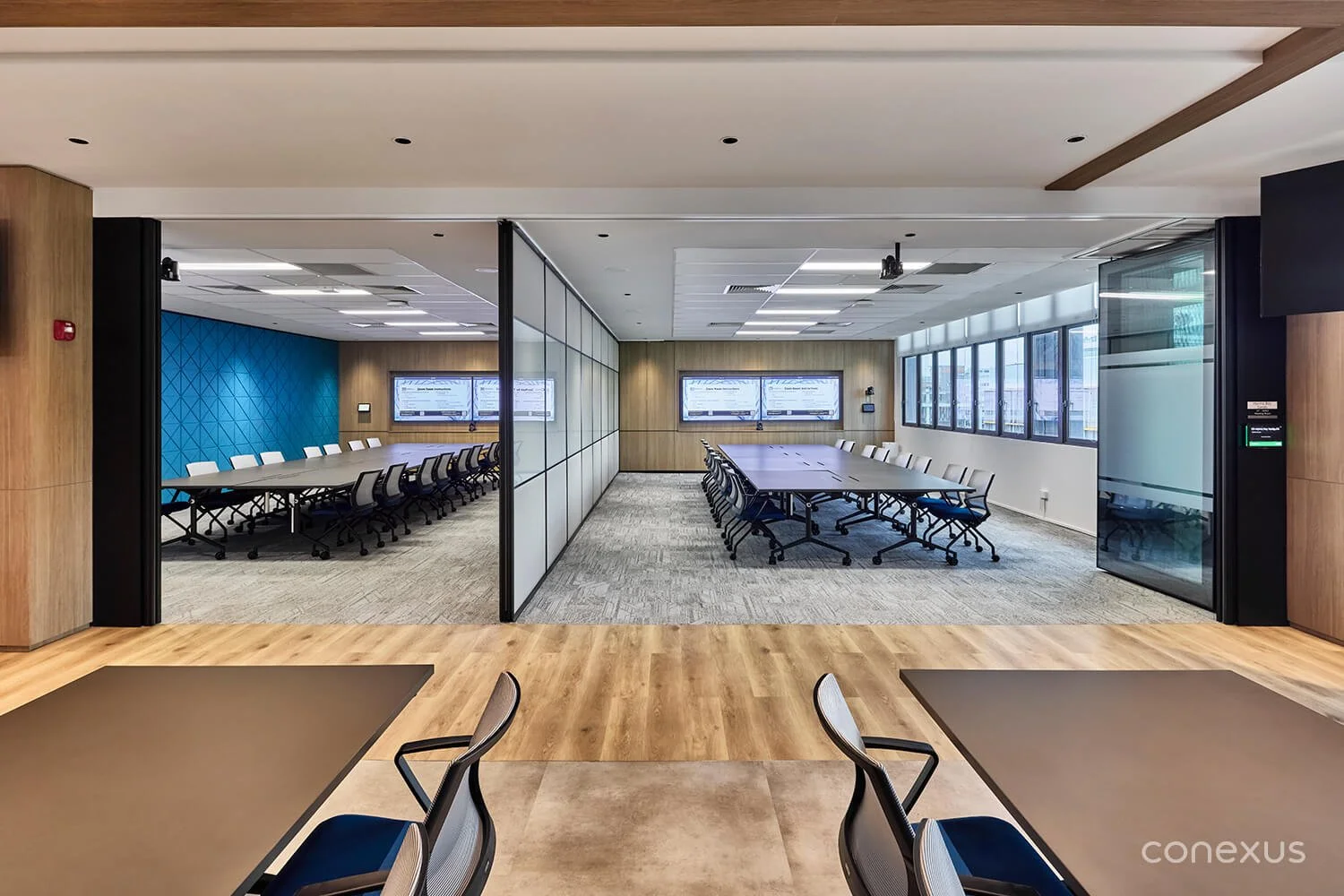
The reset is not limited to occupiers. Developers are redesigning their offering.
Rising construction costs and compressed timelines are diminishing the appeal of bare-shell units. High-growth firms require speed and scalability — not months of fit-out.
The Rise of the ‘Spec Suite’
For tenants, this shifts the model from Capital Expenditure (Capex) to Operating Expenditure (Opex), removing the friction of renovation and reducing move-in timelines from months to weeks. This trend is gaining momentum across SEA, where landlords are increasingly funding fit-outs to attract tenants wary of upfront investment. Interestingly, this is no longer limited to smaller firms; we are observing rapidly scaling tech giants opting for pre-fitted space over building from scratch, prioritising immediate occupancy to keep pace with headcount growth.
Designing for Lease Agility
As noted in Savills’ 2025 reports, shorter Core + Flex lease terms are driving a shift in design logic. This is particularly evident in Thailand, a tenant-favoured market where landlords (especially those of ageing buildings) are offering built-to-suit solutions to stay competitive. Consequently, the market is shifting towards reversible design — relying on high-quality modular pods, movable acoustic partitions, and loose furniture systems rather than fixed drywall. Clients are increasingly calculating how a relocatable phone booth offers better long-term value than a built-in focus room that must be demolished at lease end.
Conclusion
Cost efficiency remains the primary driver of corporate real estate. However, the calculation for ROI in 2026 has expanded. While density still matters for the bottom line, it now sits alongside competing priorities: strict regulatory compliance, the agility required for rapid scaling, and the operational need to reduce attrition.
Tech giants have long understood that office design is a brand vehicle; in 2026, this reality has hit the mainstream. We are no longer just solving for capacity; we are solving for intentionality. Whether it is a law firm dissolving hierarchy to signal agility, or a tech giant zoning for neuro-inclusion to prevent burnout, every square metre must now serve a distinct strategic purpose.
If the office does not offer a better experience than the home, the commute is harder to justify.
As Siva puts it, the shift is simply about remembering who the space is for: “Interior design deals with people. Our job isn’t to force a vision, but to find out what actually makes the end user happy.”
Ready to reposition your workplace for 2026?
As specialists in workplace design and build, Conexus Studio partners with businesses to translate strategy into high-performing environments. From test-fits and concept design to project management, our integrated teams manage every phase with precision.
We create workplaces that are not only functional and beautiful — but commercially intelligent.
References
Harvard T.H. Chan School of Public Health (n.d.) 'The COGfx Studies: The Impact of Green Buildings on Cognitive Function', Healthy Buildings Program. Available at: https://healthybuildings.hsph.harvard.edu/research/indoor-air-quality/cogfx/
ASHRAE (2024) 'Standard 241: Control of Infectious Aerosols'. Available at: https://www.ashrae.org/technical-resources/bookstore/ashrae-standard-241-control-of-infectious-aerosols
Building and Construction Authority (2021) 'Green Mark 2021: Intelligence Section'. Available at: https://www1.bca.gov.sg/buildsg/sustainability/green-mark-certification-scheme/green-mark-2021
CBRE (2024) 'Asia Pacific Fit-Out Cost Guide'. Available at: https://www.cbre.com/insights/books/asia-pacific-fit-out-cost-guide
Gensler (2024) 'Design Forecast 2024', Gensler Research Institute. Available at: https://www.gensler.com/gri/design-forecast-2024
JLL (2024) 'The Future of Work Survey'. Available at: https://www.us.jll.com/en/trends-and-insights/research/future-of-work-survey
Savills (2025) 'Beat Rising Renovation Costs: How to Find Fully-Fitted Office Space in Singapore'. Available at: https://www.savills.com.sg/blog/
Motionspot (2024) 'Neurodiversity and office design'. Available at: https://motionspot.co.uk/blogs/neurodiversity/neurodiversity-and-office-design
Deloitte (2024) 'Neurodiversity in the workplace'. Available at: https://www.deloitte.com/us/en/insights/topics/talent/neurodiversity-in-the-workplace.html
Lei, Q. et al. (2022) 'Post-Occupancy Evaluation of the Biophilic Design in the Workplace for Health and Wellbeing', Buildings, 12(4), 417. Available at: https://www.mdpi.com/2075-5309/12/4/417
Austin, R.D. and Pisano, G.P. (2017). Neurodiversity as a Competitive Advantage. Harvard Business Review. Available at: https://hbr.org/2017/05/neurodiversity-as-a-competitive-advantage
WANT TO FIND OUT MORE?
Let us send you our portfolio