
From Buzzwords to Business Value
What does it actually take to make technology work in the built environment — not just in a pilot, but at scale, still running six months later?
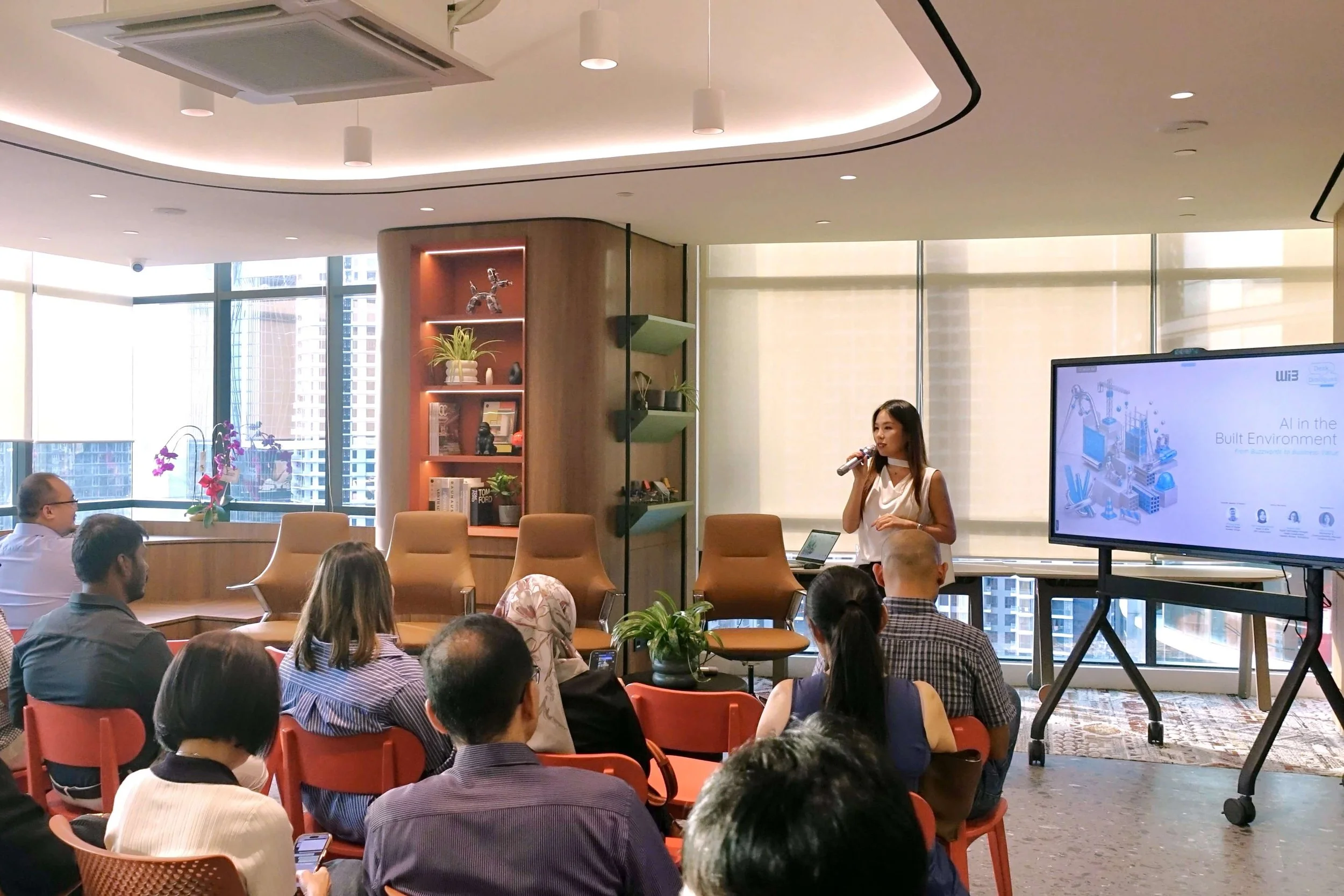
That was the question at the heart of Conexus Studio's first Desk Dialogues in Kuala Lumpur, held in partnership with Women in BIM Malaysia, bringing together industry leaders for an evening of honest conversation at the intersection of AI, people, and the built environment.
From Digital Muscle to Meaningful Data
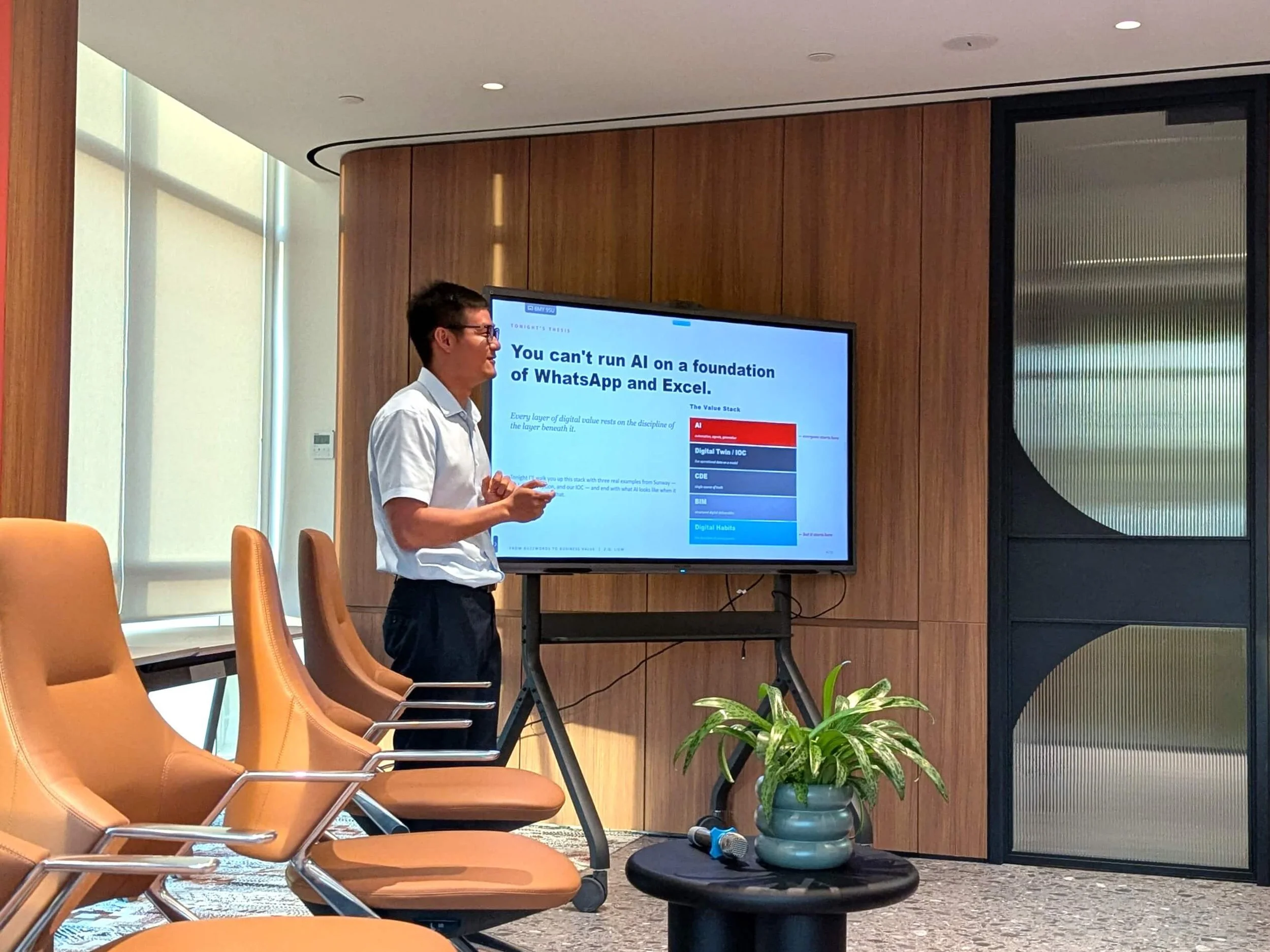
Ziqing Liew, Head of Digitalisation, Development & Delivery at Sunway Group, opened the keynote with a provocation that landed squarely: every developer in the room had been pitched AI at least once that month. Far fewer had deployed something still running six months later — and by Ziqing's estimate, the gap between those who have piloted AI and those who have truly integrated it remains wide: for every ten organisations experimenting, perhaps one or two have something operational and sustained.
Tracing Sunway's two-decade journey of building digital capability, Ziqing walked through key milestones — from SunCon's adoption of Building Information Modelling (BIM) in 2000 as an early mover in the Malaysian construction industry, to the delivery of Parcel F Putrajaya, Malaysia's largest BIM-FM (Building Information Modelling for Facilities Management) project, which produced not just a model but a handover dataset that operations teams could actually use. Today, this digital-first approach has extended to the developer level, with Sunway Property embracing BIM across its projects.
The shift to a Common Data Environment (CDE) — a structured platform for multi-party 2D and 3D collaboration that aligns with construction workflows and preserves data from massing through to facilities management — emerged as a central theme. It represents a move away from disconnected files, fragmented chat threads, and poor version control towards a more integrated and collaborative way of working.
The honest takeaway? Selecting a CDE is the easy part. Getting people to adopt it is where many organisations struggle.
The keynote closed with a thought-provoking reframe that resonated throughout the evening: the question is not "Where can we put AI?", but rather, "Where is human effort being wasted on something repeatable?"
From Experimentation to Integration
The evening's panel brought together Nur Suryani Binti Abd Khalid, Head of BIM at IJM Corporation, and Renee Jain, Digital Technology Manager at Straits Construction and Industry Advisor at PODIUM.io, for a conversation that cut through the noise and focused on what actually works.
The discussion explored what separates a successful deployment from an expensive experiment. Leadership buy-in, the panellists agreed, rarely comes from a compelling demo. It comes from one tangible outcome: a risk caught early, time saved at scale, a cost avoided. When that moment lands, the boardroom conversation changes. As Nur Suryani put it, "We had clashes that used to be discovered during construction, costing time and money. Now we find them in the model. That is where the ROI conversation becomes very easy to have with leadership."
Clients, Adoption and the Reality Gap
On how client expectations are evolving, Renee was direct. "The conversations have shifted quite noticeably. Clients used to come in asking about features, what the system can do, what it looks like. Now they're asking what problem it solves and how they'll know it's working. That's a much more productive starting point." The gap between procurement, design, and operations teams remains a persistent challenge, but the industry's maturity in defining success metrics is improving, gradually but meaningfully.
Smarter Spaces or Better Experiences?
On workplace design, the panel was measured. AI is influencing spatial planning and strategy, informing how space is allocated, how usage is tracked, and how hybrid patterns are accommodated, but the shifts remain incremental. The technology is moving faster than the behaviours it is meant to serve. The fundamentals have not changed: people want environments that support focus, connection, and genuine choice. What has shifted is the expectation that spaces should be responsive, adapting to how people actually work, not how organisations assumed they would.
A smarter workplace and a better workplace experience are not the same thing. The most effective technology in a space is often the kind you never notice — it simply makes everything feel easier, more intuitive, and more seamless. Sensors and occupancy data can optimise a floor plate, but they cannot make someone feel a space was designed with them in mind. Technology enables efficiency and removes friction. Good design and human judgement create belonging, and in a landscape where the office has to earn its place in people's weeks, belonging is no longer a nice-to-have.
The Human Edge
As AI takes on the repeatable, the question shifts from what machines can do to what becomes distinctly human as they do. The panel was clear: adaptability, critical thinking, and contextual judgement are not soft skills on the margins — they are becoming the core competencies of anyone working in the built environment.
But keeping humans in the loop is not enough. The right people, with the right lens, need to be asking the right questions of the data in the first place. Bias does not disappear when a decision becomes algorithmic — it gets embedded more quietly and scales faster. Designing for diverse needs and workstyles, the panel argued, is not an add-on. It is the standard good design should be held to from the start — and in a region as diverse as Southeast Asia, that is not just a moral position. It is a commercial one.
The Conversation Continues
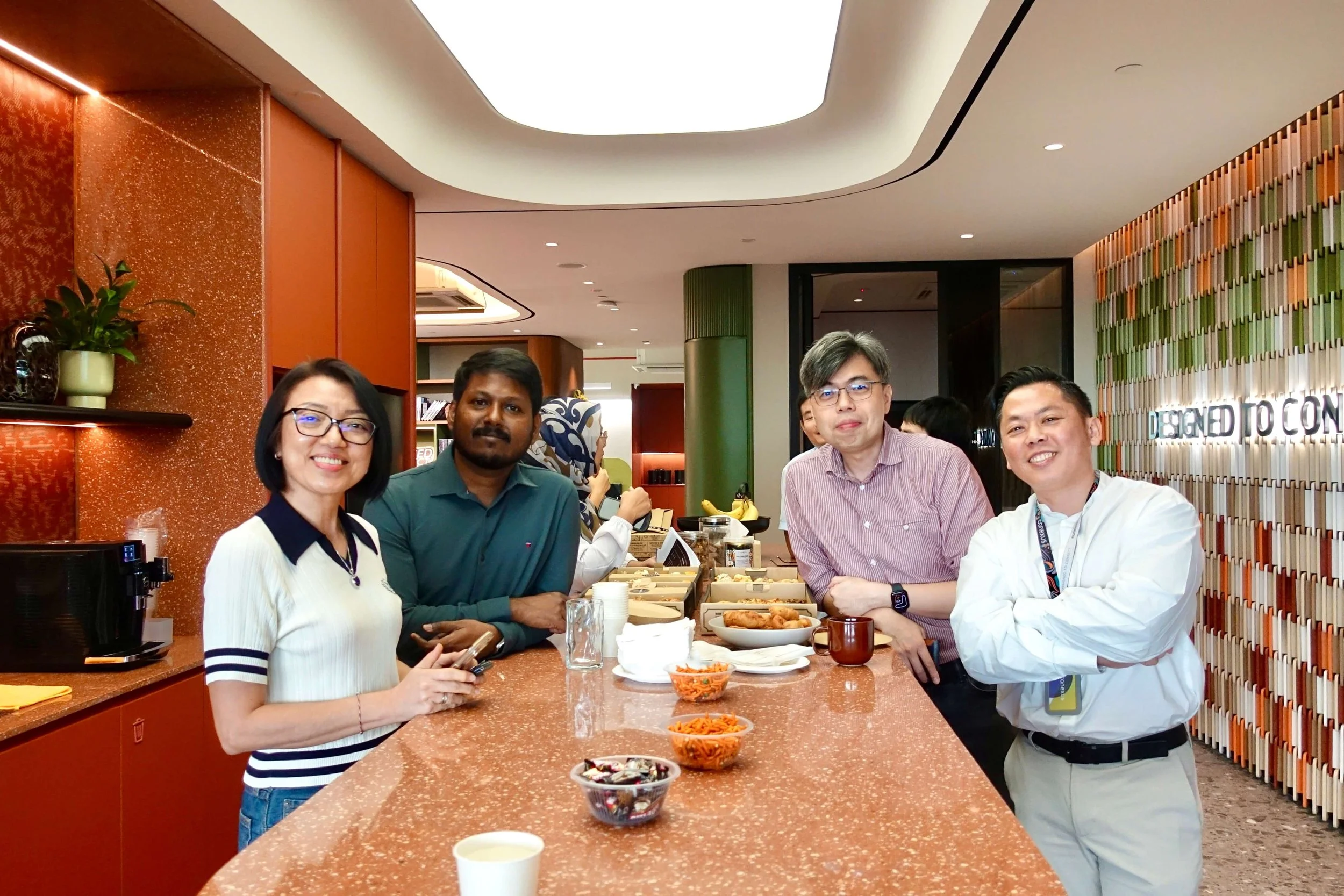
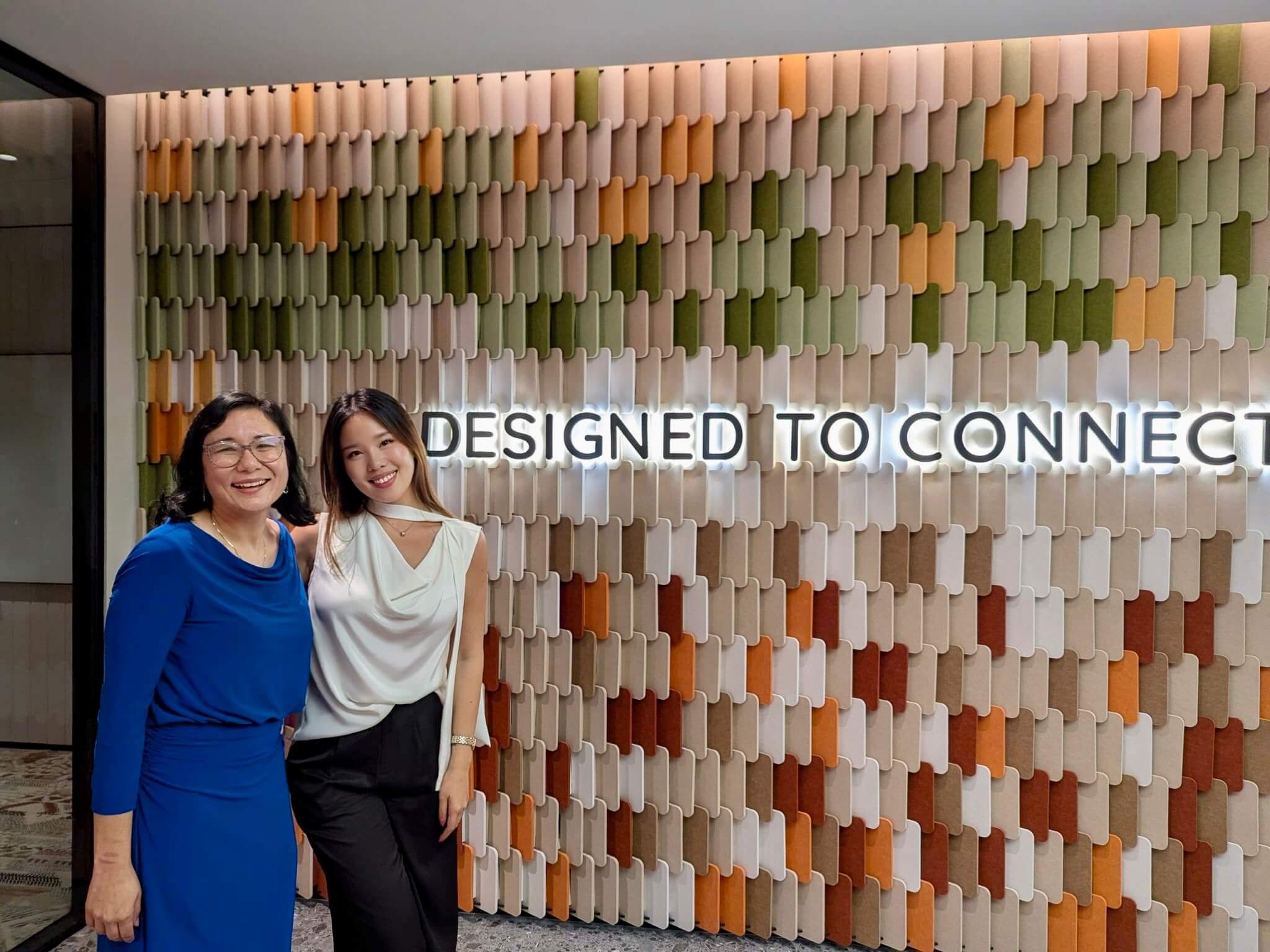
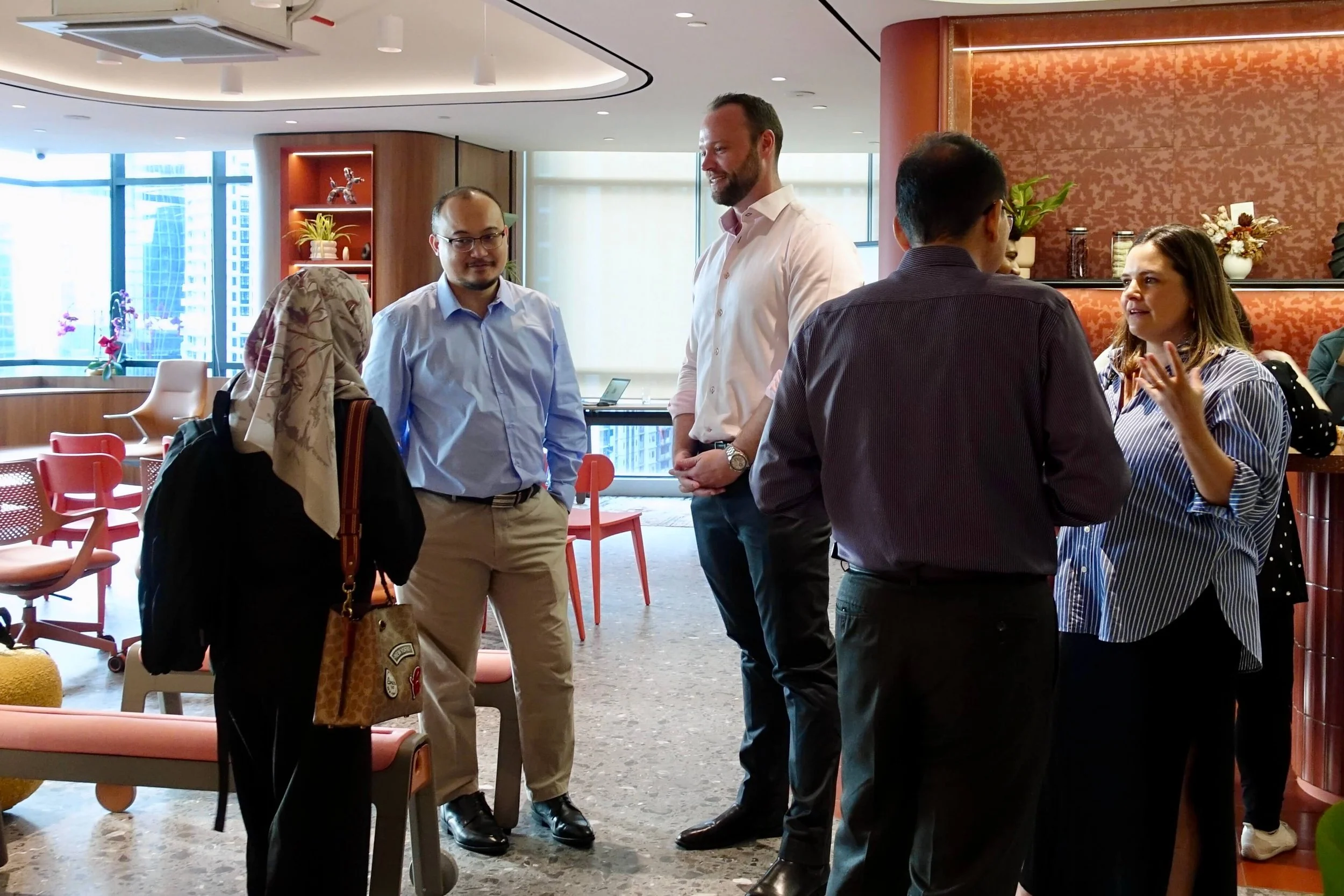
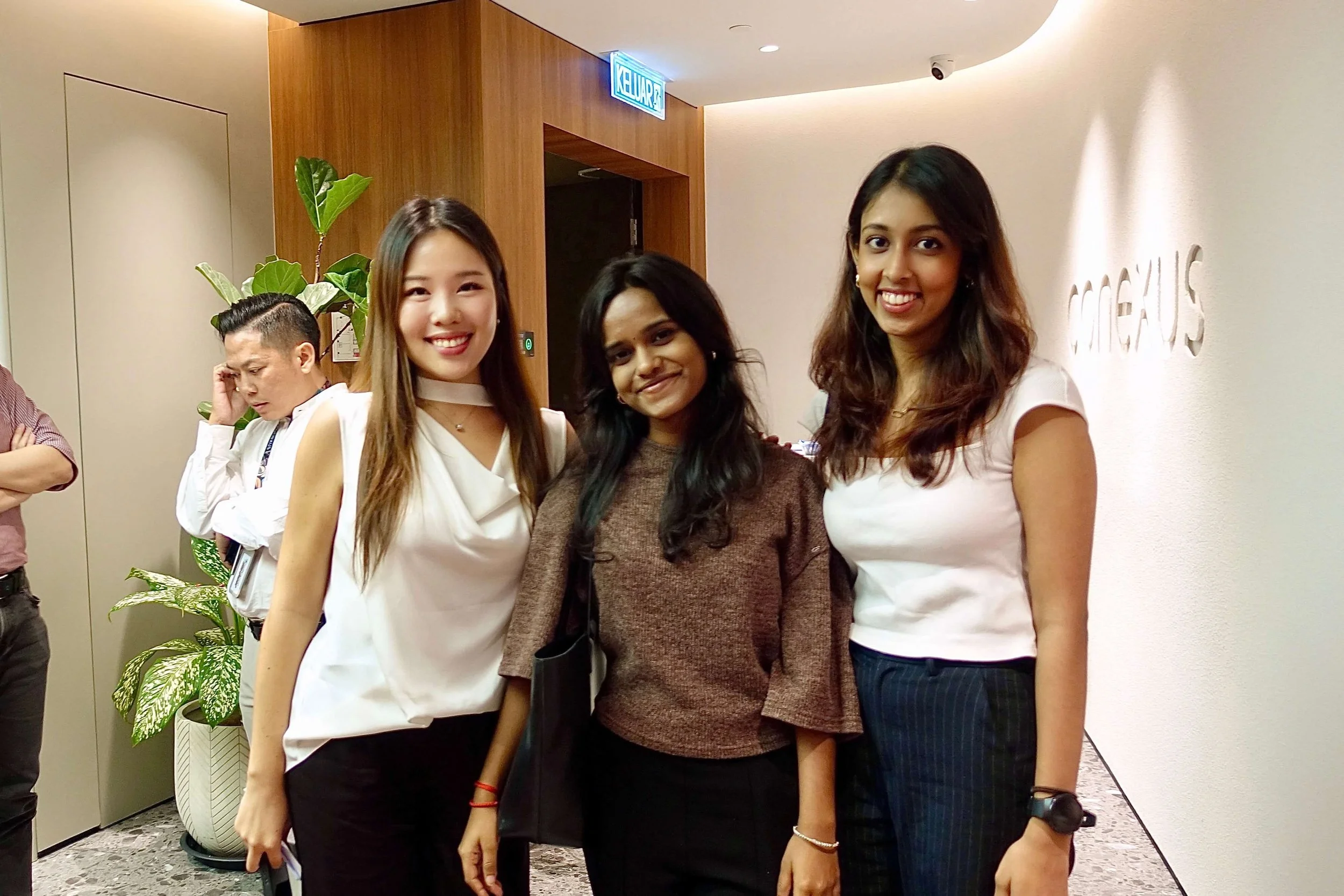
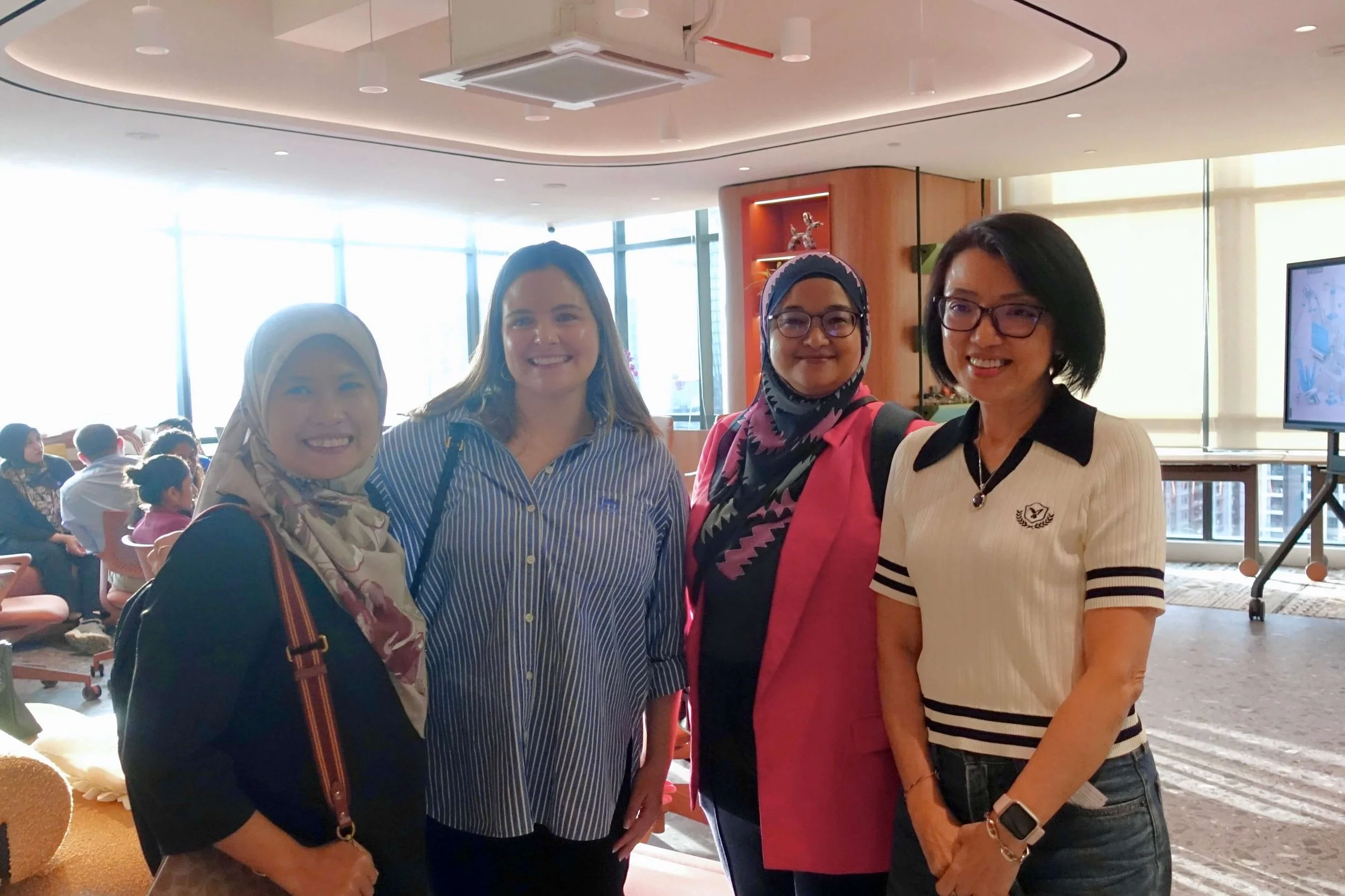
Marking Conexus Studio's first event in Malaysia and a milestone for Women in BIM, the evening closed with guests continuing the dialogue over refreshments — exchanging perspectives on how technology, design, and human experience intersect in the spaces we build and inhabit. The energy in the room was a reminder that the most meaningful progress happens not just on stage, but in the conversations that follow.
Join us for our next Desk Dialogues session as we continue exploring the future of work, technology, and the built environment.
► Keen to speak at our future sessions and connect with our community? Drop us a message at marketing@conexus.sg!
► Stay updated on our latest happenings and events by connecting with us on social media (LinkedIn|Facebook|Instagram)
►Talk to Conexus Studio about translating these insights into net desirable spaces — and explore how we can collaborate on your office design.